As organisations become increasingly global, the demand for effective business language training has never been higher. Multinational teams, international clients and culturally diverse workplaces all depend on one essential capability: clear, confident communication.
While the need is evident, the choice of delivery model is often less straightforward.
Should your organisation invest in face-to-face language training, move fully online or adopt a hybrid approach? The right answer depends not only on logistics but on learning outcomes, business objectives and how your people actually work.
Drawing on nearly three decades of experience delivering professional language training across industries and regions, this guide explores how to choose the right model and maximise the impact of your investment.
Face-to-Face Language Training

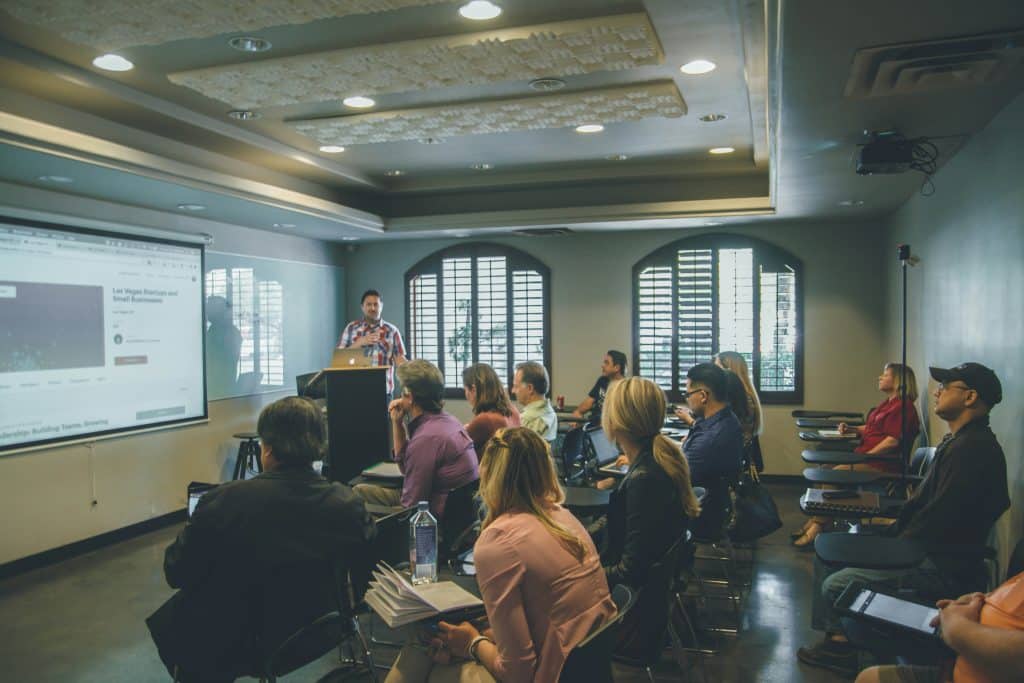
Face-to-face language training remains a highly effective option, particularly for organisations that value immersive learning and direct interaction. Working in person with a native-speaking trainer allows for immediate feedback, natural conversation flow and close attention to pronunciation, tone and non-verbal communication.
This approach is especially valuable for senior leaders and client-facing professionals where nuance, confidence and cultural awareness play a critical role. It is also well suited to presentation skills, negotiations and other high-stakes communication scenarios.
That said, face-to-face delivery can be less flexible for globally dispersed teams and may require greater coordination, particularly when participants are spread across multiple locations.
Online Language Training

Online language training has evolved significantly in recent years and, when delivered by experienced trainers through a structured programme, can offer excellent results. It provides organisations with the flexibility to train teams across time zones while maintaining consistency in delivery and quality.
This model works particularly well for remote or hybrid workforces, large-scale programmes and ongoing language development. Learners benefit from access to expert trainers regardless of location, while organisations benefit from scalability and efficiency.
The effectiveness of online training depends heavily on design and delivery. Without clear structure, accountability and professional oversight, it risks becoming fragmented or disengaging. When managed well, however, it can be a powerful and practical solution.
Hybrid Language Training

Hybrid language training combines the strengths of face-to-face and online delivery, making it an increasingly popular choice for modern organisations. By blending in-person sessions with online learning, businesses can offer both depth and flexibility without compromising outcomes.
In-person sessions support immersion, relationship-building and confidence, while online sessions ensure continuity and adaptability around busy schedules. This model is particularly effective for multinational organisations, leadership development programmes and long-term skills growth.
For many organisations, hybrid training delivers the strongest balance between engagement, practicality and measurable progress.
Choosing the Right Model for Your Business
Rather than asking which model is best, organisations are better served by asking which model best supports their people and strategic goals.
Factors such as workforce structure, learning objectives, scale and operational constraints all play a role. Teams working across locations may prioritise flexibility, while leadership teams or client-facing roles may benefit from more immersive, in-person sessions. The most successful programmes are those that are tailored to real workplace demands rather than constrained by a single delivery method.
Why Quality Matters More Than the Format
Ultimately, the success of any language training programme depends less on how it is delivered and more on how well it is designed, managed and supported.
At Simon & Simon International, every programme is delivered by qualified, native-speaking trainers with industry experience. Courses are tailored to specific roles, sectors and organisational objectives, with ongoing support for HR and L&D teams to ensure progress remains aligned with business needs.
With training available in over 78 languages and dialects and delivered across all proficiency levels, the focus remains consistent regardless of format: measurable progress, practical relevance and tangible business impact.
Choosing a Partner, Not Just a Programme
Language training is not a one-off initiative. It is a strategic capability that supports productivity, inclusion, leadership development and long-term growth.
With over 3.1 million hours of training delivered, more than 1,030 clients supported and programmes running in 90 global locations, Simon & Simon International has spent nearly three decades helping organisations communicate more effectively across languages and cultures.
The delivery model matters. The right training partner matters more.
Ready to Find the Right Language Training Model for Your Organisation?
Whether you are considering face-to-face, online or hybrid language training, our team will work closely with you to design a programme aligned to your people, objectives and operational realities.
Contact Simon & Simon International today to discuss your corporate language training needs and discover how bespoke, professional language training can deliver lasting results.